
Coaching Frameworks In Use
Grassroots rugby coaching revolves around building a positive, safe and devlopmentally focused environment. This is essential for keeping players in the game and helping them reach their full potential
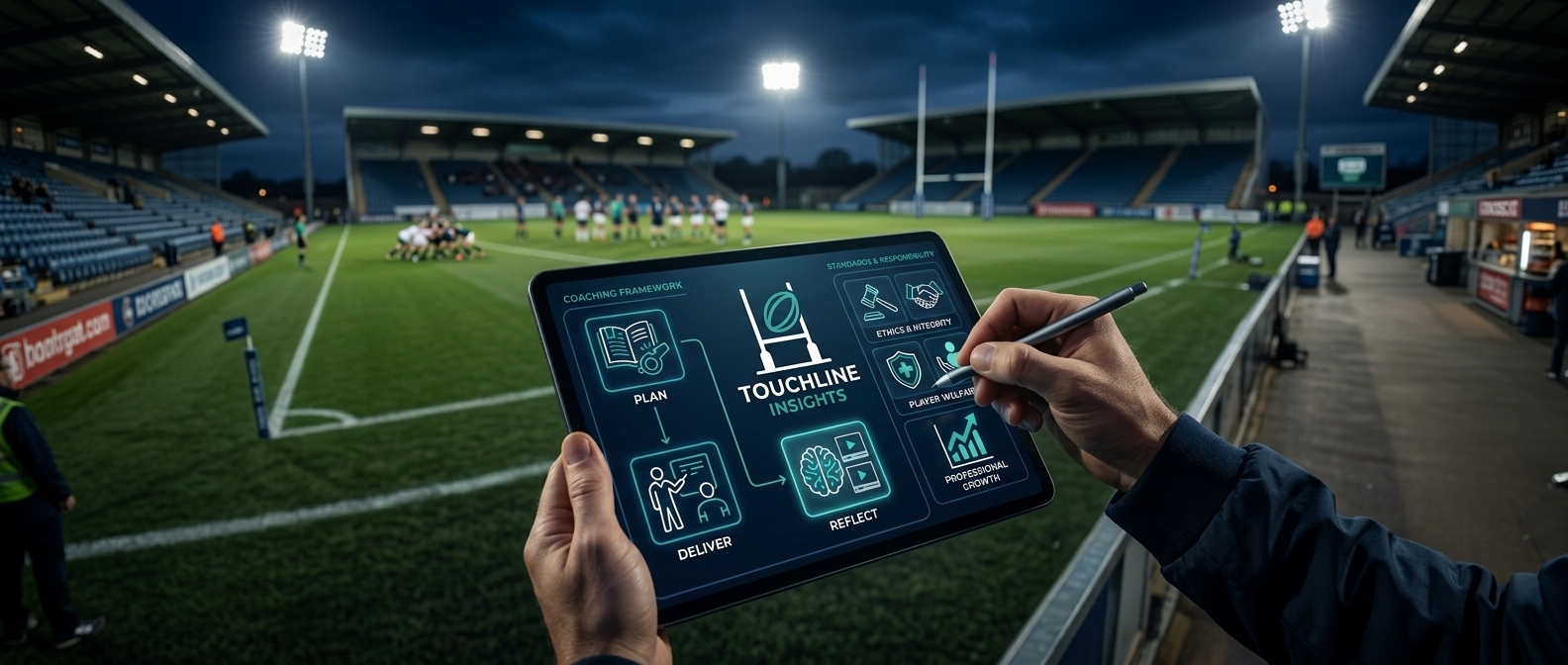
This guide brings together the England RFU and World Rugby frameworks that helped form the structure of Touchline Insights into a practical document to help coaches manage their teams effectively
Cultural Foundation
Before planning any drills, coaches, especially within grassroots, must establish the right culture. The RFU builds this around TREDS values:
- Teamwork - Encouraging players to work together and support each other on and off the pitch
- Respect - Fostering respect for teammates, the opposition, the referee and coaches
- Enjoyment - Ensuring that the primary reason players show up is to have fun, which should be at the forefront of every session
- Discipline - Developing self-control, adherance to the laws and emotional regulation
- Sportsmanship - Celebrating fair play, winning with grace and losing with dignity
Session Design
Training drills and running sessions within RFU endorsed clubs should follow the APES framework. This ensures that coaching time is effective and player-focused
- Active - Players should be constantly engaged with drills that require long lines or standing around being avoided
- Purposeful - Drills should replicate match situations rather than mundane unopposed runs. These drills can be enhanced through the suggested training from Match Reports to target key weakness areas
- Enjoyable - Players should enjoy drills and sessions with gamified constraints, mini-games and competitive challenges over repetitive static drills
- Safe - The environment should be secure with pitch hazards cleared and players given the correct techniques and equipment to safely perform
Welfare and Safety
Activate Warm-Up Programme
Activate is a World Rugby endorsed, evidence-based injury-prevention warm-up programme. Implementing it regularly into a pre-matcha dn pre-training routine is vital
- Impact - Activate can reduce soft-tissue injuries by 26% - 40% and reduces the risk of concussion by 29% - 60% in both youth and adult players
- Focus - The excercises improve general movement control, core strength, balance and agility. It also incorporates specific neck exercises designed to develop stability and mobility, minimising the whiplash effect that often leads to concussions
Concussion Management
Grassroots must operate with a ZERO-RISK approach to head knocks
- Recognise - Learn the signs of concussions
- Remove - If you suspect a concussion, the player must be permanently removed from play immediately "if in doubt, sit them out"
- Return To Play - Strictly follow the graduated Return To Play protocols mandated by the RFU before allowing a player to resume training
Age Grade Rugby
The Half Game Rule
Grassroots is about long-term development over short-term wins. The clearest message from young players is that they paly to spend time with friends
- Regulation - This rule mandates that every player in a match-day squad gets to play at least half of the available game time
- Application - Do not sideline lesser-developed players just to win a junior fixture. Rotate the squad fairly to build confidence across the team to ensure player retention and enjoyment
Kids First Approach
The Kids First approach requires coaches to shift their focus away from the scoreboard and, instead, foster a growth mindset by praising effort, bravery and teamwork over tries and win
Structuring Your Coaching
The best method of creating a solid training plan is by reviewing the feedback generated by the Touchline Insights Match Report, add in your own game-specific context to filter the feedback and then follow a simple Plan - Do - Review cycle:
- Plan - Design the session using the APES framework. Structure the session with the Activate warm-up first, followed by skill blacks and ending with conditioned games
- Do - Deliver the session, step back and let the players play and offer insights and advice where necessary
- Review - After the session, gather the team for a debrief. Find out what worked well and what needs work. Self-reflect on your own performance and adjust future training sessions